Tuesday, February 14, 2012

Happy Valentines Day!


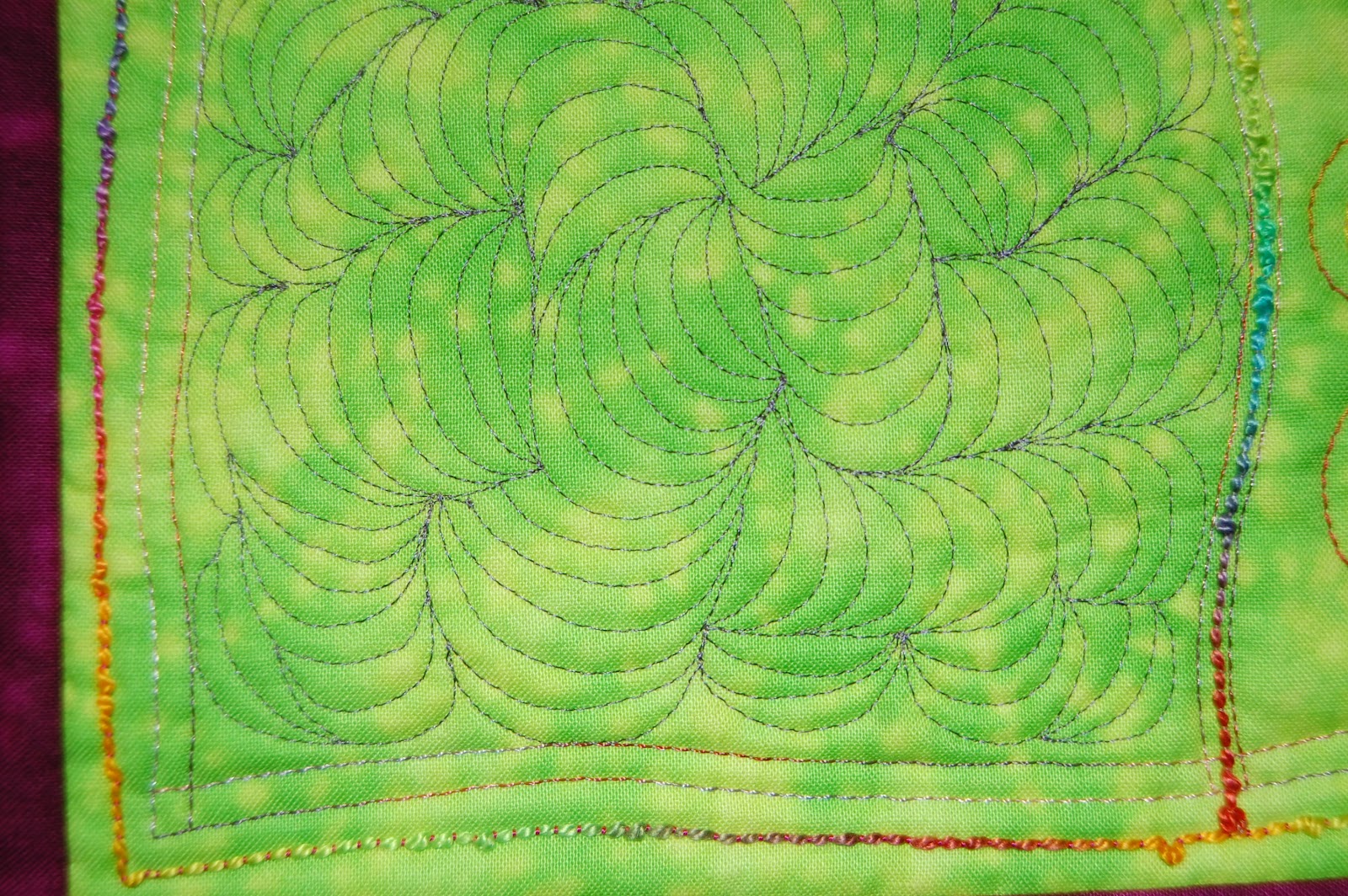
Trapuntoed Heart with Cross Hatching and Diagonal Lines in Background

Copyright©2012, Sharon Baggs

Sunday, February 12, 2012

Quilting Samplers


Over the years I have made several samples of quilting designs. Some of these I have learned from teachers such as Harriet Hargrave, Diane Gaudynski, Sue Nickles, and Maurine Noble. Others designs have been developed from my own doodling. I keep a sketch book handy to draw out interesting line designs I see in ironwork, buildings, and signage. There is much to see and record if you look around.


When I was teaching beginning machine quilting, I used Maurine Noble's book Machine Quilting Made Easy. It's a great starting point, affordably priced, and is probably in it's 30th press run by now. I had been quilting for awhile when I had the opportunity to take class from Maurine. Although not technically a beginner, I certainly learned a great deal from her because she was the author of the book and there's those little things gleaned from her experience that I really treasured.

Here's the sample I made from Maurine's book and used to teach from her book:


Another teacher who came to town was Harriet Hargrave, the godmother of machine quilting. She taught me the importance of excellent mechanics, such as precision piecing, fabric care, batting choices, and choosing a quilting design to properly compliment the quilt's style. Through her I came to love stencils and saw how a simply quilted grid on a traditional style quilt is often the best choice. I love to quilt grids, such as these:


About five years ago, I went to Harriet's Machine Quilting Celebration in her hometown of Denver, Colorado. There I took class from Diane Guadynski and learned some of her exquisite free-form designs, such as Bouncing Bananas:


Eventually, I designed a sampler that incorporated the use of free-form designs, stencils and grids, along with the mechanics of stitching-in-the-ditch. A quilt using stitch-in-the-ditch, along with a simple grid can be an excellent choice for providing good integrity for the quilt and making it last through wear, tear, and washings.


Hanging your samplers near your quilting area will help spark ideas when deciding how you desire to quilt your quilt!

Copyright©2012, Sharon Baggs

Wednesday, January 18, 2012

Batik Brick Road


This quilt is so close to being completed! I've made many quilts of this design (Yellow Brick Road by Atkinson Designs) over the past 10 years and I'm so ready to have this be the last one. Love the design but I've quilted a small freeway of these quilts over the years. Time to move on.

I still have a few more open spaces to quilt, but after quilting the feather border, I  really wanted to get the binding on. I made the multi-colored batik binding about three years ago. Glad I could find it!


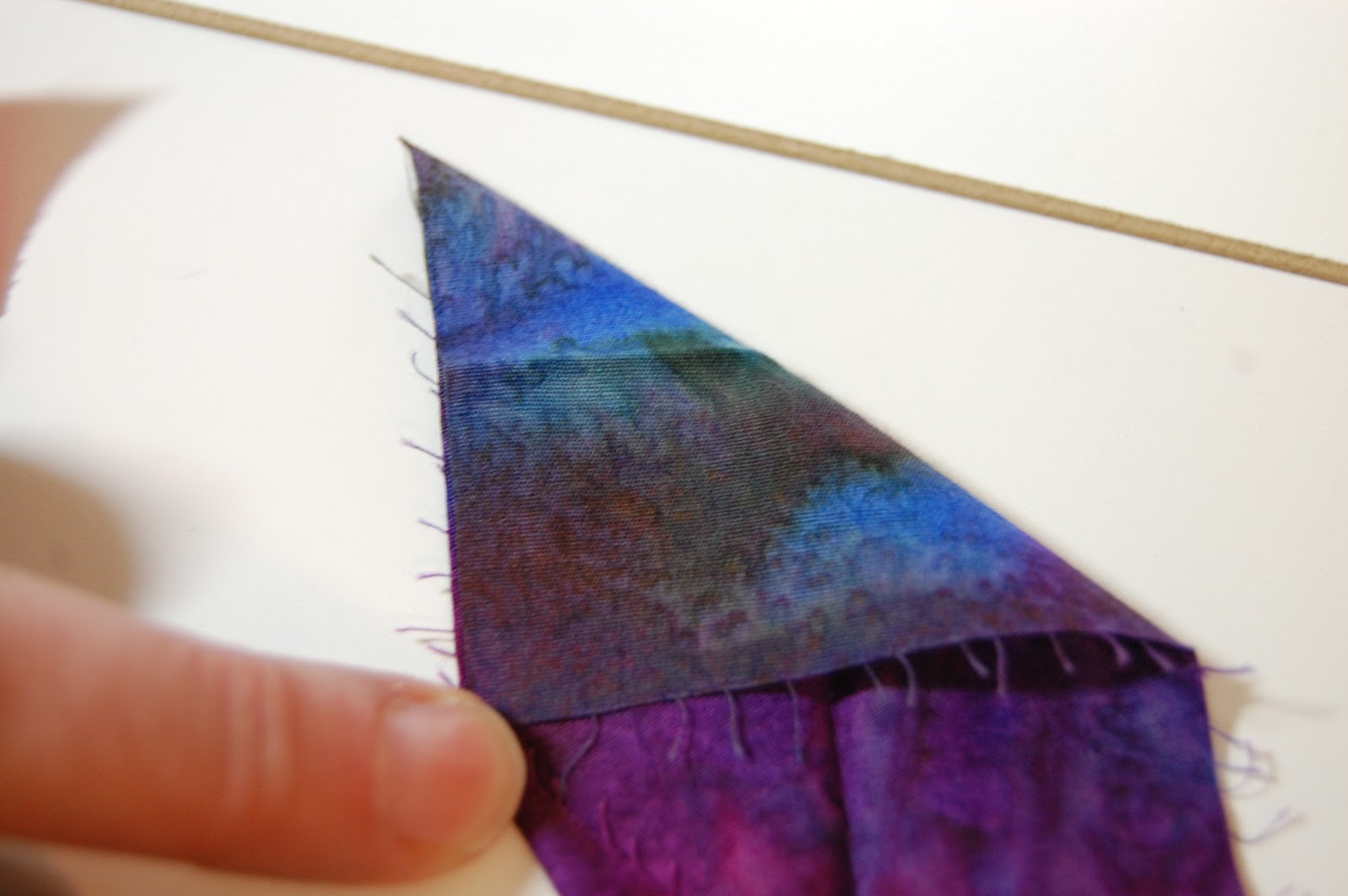
When joining the beginning strip to the ending strip, overlap the strips by the width of the strip (this one is 2.5"). Trim the excess binding away so there is only 2.5" of overlap. Fold the right corner over to form a 45 degree angle and finger press in a creased sewing line.


Use a chalk marker to draw along the creased line on the wrong side of the fabric. Lay right sides together, matching corners of the fabric together of both ends and pin together.


Trim the seam and press open. Press the folded binding together and sew in place.


Bring the folded edge of the binding to the back of the quilt and hand sew to the backing, using a whip stitch. Check the front of the quilt to make sure you don't poke the thread through to the front. Work your sewing needle horizontally by stitching into the batting and back out to catch the binding edge.


I'll talk more about the finishing details of this quilt as I work on them this week and I'll post some of the  free form designs featured on the fabric.

Copyright©2012, Sharon Baggs

Tuesday, December 20, 2011

Washing a Baby Quilt/Batting Choices

Baby quilts are a wonderful gift to give and provide a great opportunity to practice beginning quilting skills or try a new free-form design. Choose a design that is simple and even so the quilting density remains consistent. The quilt pictured below features an edge-to-edge clamshell design.

These small quilts take a lot of wear and tear, so an even amount of quilting is really necessary for keeping the quilt held together as long as possible. Skimping on the quilting because it's "only a baby quilt" will result in a short life for the quilt. Large, open areas need to be quilted evenly so they don't get distorted and worn over time.


Minimal quilting and regular washing cause baby quilts to wear out in the first year. Rather than tossing a quilt in a regular wash cycle, try soaking out stains.  A short time spent soaking is better than the agitation of the washing machine. Use a eco-friendly washing product for all your quilts. I like Orvus Paste and Ivory hand dish liquid. Detergents contain phosphates which are harsh and will strip the colors from quilts over time.


I usually let the washing machine fill with lukewarm water and the recommended soap. Let the quilt soak in this solution for about 20 mins.; spin out, rinse and spin again. A little agitation is OK but don't let the entire cycle run if you can manipulate this on your machine. My washer is 20 years old and I can control the dials but newer models might not allow changes in the cycle because they "lock in".

Another option is to use a clean dishpan, tub or sink for the soaking and rinsing. Use a large bath towel to roll the quilt and squeeze out moisture. Lay flat on a dry towel to air dry the quilt. Choosing a gentle washing/drying method will keep fabric intact longer. When giving a quilt as a gift, a little written note on how to care for the quilt and a small bottle of washing soap will be appreciated by the quilt owner!


Use a breathable, natural fiber batting such as Hobbs Heirloom 80/20 (cotton/poly blend) or Hobbs Wool. Avoid battings that recommend quilting 8-10" apart, such as Warm and Natural. Save these products for wall hangings or tablerunners. Also, 100% polyester battings don't breathe like a cotton batting. This means they insulate well but can be too warm for swaddling. Stick with natural fibers--cotton, wool, silk, with a bit of polyester mixed in for durability--and you will have a batting that can be quilted heavily and still maintain the drapability of a cozy quilt.

Copyright©2011, Sharon Baggs